
Buckeye, AZ · Garage Door Service
New Garage Door Installation for Litchfield Park Houses
A straight look at new garage door installation for Litchfield Park's 2001-era houses - what breaks first, what a replacement costs to plan for, and what the heat does to it.
- Repairs & new doors
- Springs & openers
- Serving Buckeye & the metro
Parts We Carry
The call we get most from this side of town starts the same way: an opener that grinds instead of lifts, or a door that drops the last foot instead of settling into the track. That's not bad luck, it's math. Litchfield Park's houses mostly went up around 2001, which puts the original torsion springs and the factory-installed opener on most of these garages well past their rated cycle count by now. A spring rated for ten thousand cycles doesn't care how well you maintained it - it just gives out.
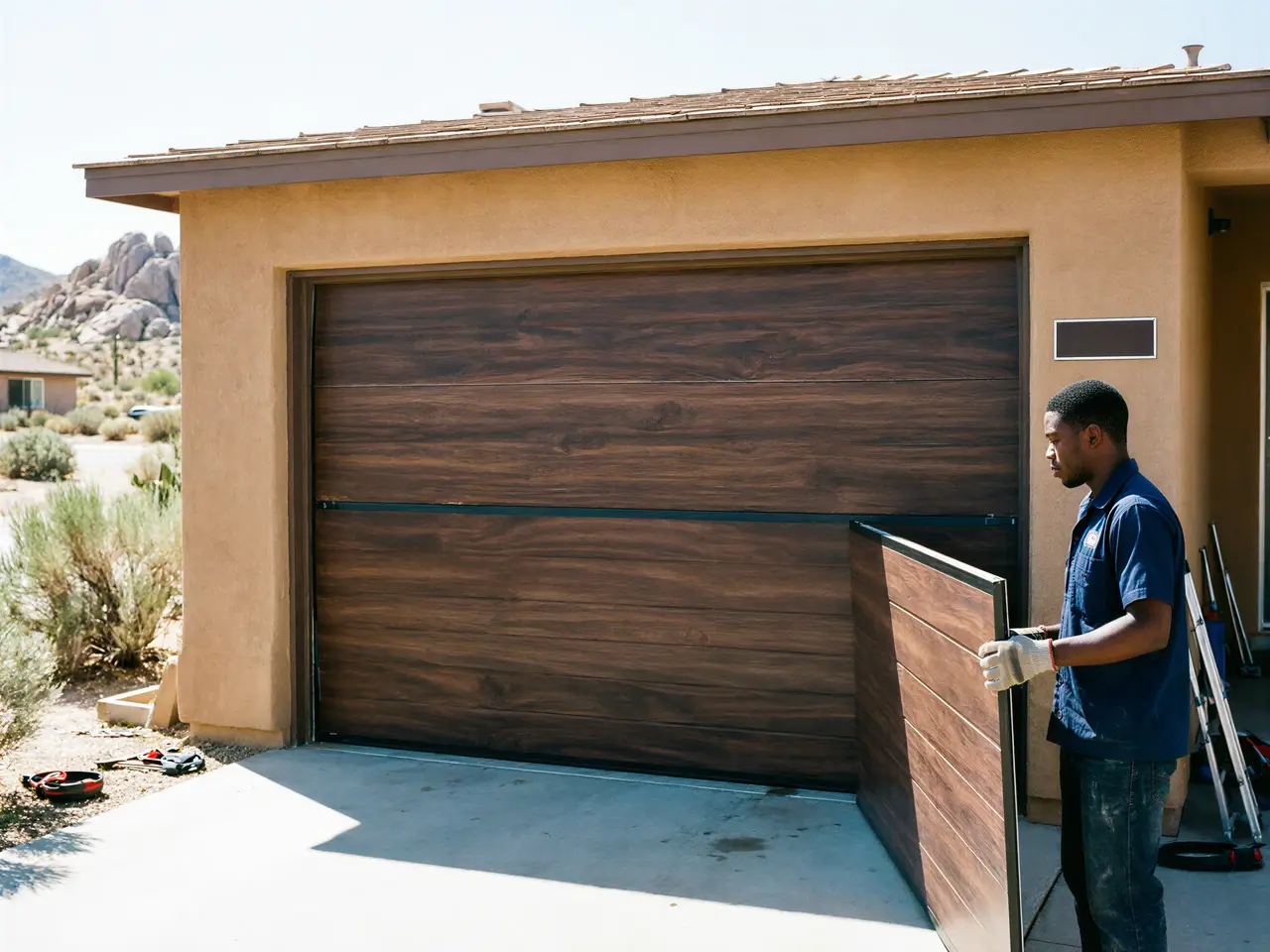
When we're out your way for a new install, we bring torsion springs sized to the actual weight of the door going up, not a one-size-fits-all stand-in, plus insulated steel panels built for the heat this area sees rather than a bare single-layer panel that bakes in a closed garage. We also carry opener units with heat-rated logic boards - the circuit boards in older chain-drive units can start misfiring once the garage regularly hits triple digits, and a 2001-built garage with no insulation in the door or walls holds that heat for hours after sundown. We don't stock every brand's proprietary trim kit, so if your old frame needs an odd-sized jamb piece, that's sometimes a special order.
The Cost of This Job
We're not going to put a number here we can't back up with paperwork - installation pricing depends on door size, insulation level, and opener choice, and we'll quote that on the actual visit. What we can tell you is what drives the cost up or down in this specific area. Litchfield Park's median household income runs close to $125,000, and we see that reflected in what people choose: more owners here ask for insulated doors with a higher R-value and quieter belt-drive openers than the bare-minimum builder-grade setup that originally went in back when these houses were framed.
The other cost driver is distance. Litchfield Park sits about 17 miles out from our Buckeye base, so a same-day install here gets scheduled as a dedicated trip rather than squeezed between closer jobs - that affects how far out we can book you, not what the door itself costs. If your current door and opener are both original to a 2001 build, replacing both together usually costs less overall than doing them as two separate visits months apart, since labor overlaps.
Why This Fails Locally
A door built for a 2001 house wasn't engineered for 2024 heat exposure, and that gap is where the failures start. Steel panels without a foam core expand and contract every single day the surface temperature swings from sun to shade, and over two decades that flexing works bolts loose and bends track brackets out of true. If your opener still has the original chain drive, the heat does something similar to its logic board - it's one of the more common reasons an opener starts working intermittently before it quits for good.
Springs fail for a more boring reason: cycles. A spring doing two trips a day for over twenty years has done somewhere north of fourteen thousand cycles, well past what a standard torsion spring is rated for. None of this is unique to any one house - it's what happens to a 2001-era garage door system that's never been touched since the day the house was finished.
The Complications
The biggest practical issue with a Litchfield Park install isn't the door, it's the trip. At 17 miles from Buckeye, we plan these as a full visit rather than a quick in-and-out, which means measurements and opener compatibility need to be nailed down ahead of time so we're not making a second trip for a part we didn't bring.
The other complication is what's behind the existing door. On a lot of 2001-built garages, the wall studs and header were framed for the lighter, uninsulated door that originally went in. Stepping up to a heavier insulated door sometimes means the header or the track mounting needs reinforcing first - that's not a job we can quote sight unseen, and it's the kind of thing that only shows up once the old door is off the hinges. We'll flag it before we cut anything, not after.
The DIY Question
We'll say this plainly: a full door swap is not a weekend project, and we'd rather tell you that upfront than have you find out halfway through with a 150-pound panel balanced on a ladder. A torsion spring under tension can break a hand or worse if it's wound or unwound wrong, and that risk doesn't go down because the door is newer or the house is newer.
What you can reasonably do yourself: swap worn rollers, lubricate the track, tighten loose hinge bolts, and test the auto-reverse safety sensors. None of that requires touching the spring system. If your opener's logic board is the problem - which, given how many openers out this way are original to 2001, is common - that's a straight swap we'd rather handle, since a miswired unit can disable the safety reverse feature entirely.
How Long It Takes
A standard new door and opener install, once we're on site, typically runs a half day to a full day depending on whether we're also reinforcing the header or rewiring for a new opener model. Given the 17-mile trip from Buckeye, we build the schedule around a single dedicated visit rather than splitting the job across two trips - that keeps the cost down even if it means booking a specific day rather than a same-week slot.
If we find that the garage's original framing needs work before the new door goes in, that adds time on the day, since it's not something we can prep for without seeing it. We'll tell you on the spot if that's the case rather than guessing in advance.
Frequently asked questions
How old is my garage door likely to be if my house was built around 2001?
If your house hasn't had the door replaced, you're likely running the original opener and torsion spring from construction, now over twenty years of cycles in. That's well past the standard spring's rated lifespan and close to when original opener logic boards start failing from heat exposure.
Does the heat here actually affect garage doors, or is that just marketing talk?
It's a real factor. Uninsulated steel panels flex daily with temperature swings, which loosens hardware over years, and opener circuit boards can misfire once a closed, uninsulated garage holds triple-digit heat for hours. Insulated doors and heat-rated opener boards address both issues directly.
How far out is Litchfield Park from your base, and does that affect scheduling?
It's about 17 miles from our Buckeye location, so we schedule installs here as a dedicated trip rather than a quick add-on between closer jobs. That means booking a specific day works better than expecting a same-day slot.
Will a new insulated door fit my existing garage opening?
Usually yes, but on houses built around 2001 the framing sometimes sized the header for the original lighter door. If you're stepping up to a heavier insulated panel, we check the header and track mounting before installing - occasionally that needs reinforcing first.
More garage door services in Litchfield Park
- Emergency Garage Door Repair in Litchfield Park
- Garage Door Repair in Litchfield Park
- Garage Door Service in Litchfield Park
- Garage Door Maintenance in Litchfield Park
- Garage Door Opener Installation in Litchfield Park
- Garage Door Opener Repair in Litchfield Park
- Garage Door Spring Repair in Litchfield Park
Book garage door service in Buckeye
Call now or request a quote - tell us what the door is doing and where you are.