
Buckeye, AZ · Garage Door Service
What a Garage Door Job Really Costs in Buckeye
Buckeye's garage doors are mostly newer builds, but severe heat and builder-grade parts still fail. Here's what repairs actually cost and when to call.
- Repairs & new doors
- Springs & openers
- Serving Buckeye & the metro
The Cost of This Job
Most of the garage doors we work on in Buckeye are going on houses built after 2010 - this area grew fast, and the housing stock reflects it. That matters for cost in a way a lot of homeowners don't expect: these aren't custom doors with hard-to-find parts, they're builder-grade steel sections installed by the production home companies that put up these neighborhoods. The springs, rollers, and openers that shipped with them were picked to meet a price point, not to last forever in triple-digit heat.
With median household income here sitting around $124,973 across roughly 2,881 households, a lot of owners are in a position to replace rather than patch - and for doors already ten-plus years into a severe heat climate, replacement of the spring system or opener motor is often the right call rather than a repeated repair. We don't carry pricing we can quote in general terms here; every job depends on door size, panel condition, and what's actually failed. What we can tell you is that original builder hardware on a post-2010 house is usually standard-size stock, which keeps parts costs down compared to custom or older doors.
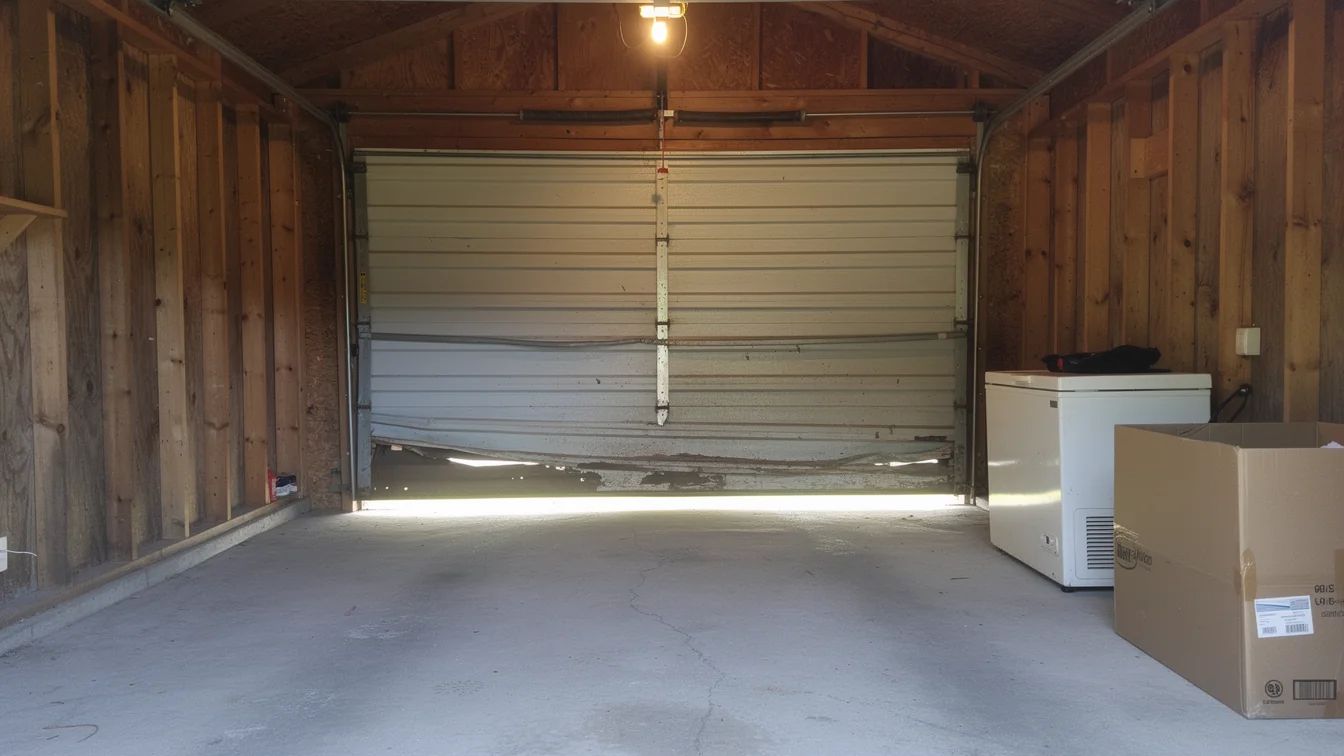
One honest limit: if the door itself has warped from heat exposure on a west-facing wall, no repair fixes that - it needs a new door, not a new spring.
How Local Conditions Play In
Buckeye sits in a severe heat climate band, and that's the single biggest factor in how these newer doors fail. Steel panels expand and contract daily through the summer, which works screws loose at the hinges and throws tracks slightly out of alignment over a few seasons - not a one-time event, a slow drift that shows up as a door that rubs or binds on one side.
Nylon rollers and plastic opener gears are the other weak point. Builder-grade openers installed in these post-2010 homes often use nylon drive gears that were never rated for a garage that sits at 130+ degrees in July. Heat breaks down the grease in the gear housing faster than it would in a milder climate, and that's usually what's behind an opener that runs but doesn't move the door, or one that hums and stops.
If your garage faces west or south without much shade - common layout in the newer subdivisions toward Tartesso and West Phoenix Estates - expect faster wear on the door's outer coat and on any exposed cable or spring hardware than a north-facing door would see. We don't have failure-rate data broken out by orientation, so we won't put a number on it, but the pattern shows up often enough in service calls that it's worth mentioning before you assume a spring failure is random.
What Is Going On
When a spring breaks in this area, it's rarely a 20-year-old door - most of what we see is five to twelve years old, consistent with the post-2010 building wave here. What's usually going on is that the torsion spring was rated for an average cycle count assuming moderate conditions, and severe heat accelerates metal fatigue in a way the original rating didn't fully account for.
On the opener side, what looks like a dead motor is often a stripped nylon gear - cheap to replace if caught early, expensive if it's left running and burns out the circuit board trying to compensate. Track misalignment from thermal expansion is the third common pattern: the door looks fine standing still but grinds or jumps partway through its travel.
We serve households across this stretch of Buckeye, including areas near Verrado, Canyon Trails, and out toward Tonopah and Litchfield Park, and the pattern holds pretty consistently: newer doors, heat-driven wear, builder-grade parts reaching the end of their rated life around the same age across a lot of houses built in the same window. That's not a coincidence - it's a cohort of doors all hitting their weak point at once.
When to Call Someone
Call if the door won't open and you hear the opener motor running - that's almost always a broken spring or a stripped gear, not something to force by hand. Don't keep hitting the remote; that's how a stripped nylon gear turns into a burned-out opener board.
Call if the door only moves partway and reverses, especially on a hot afternoon - that's often thermal misalignment in the track, and running it repeatedly can bend the track further.
Call if you hear a loud bang from the garage followed by the door refusing to move - that's a torsion spring letting go, and the door is not safe to operate until it's replaced.
We don't recommend DIY spring replacement on these systems; a torsion spring under tension is the one job where a mistake causes real injury, and that holds regardless of how new or old the door is. If your opener is original to a post-2010 build and the gear has stripped, we'll tell you honestly whether a gear kit is worth it or whether the unit's age means a full opener replacement makes more sense - we don't carry spare parts for every model that shipped with these early-2010s builds, so sometimes replacement is simply the faster option.
Find more on what we handle at /.
Frequently asked questions
Why did my garage door spring break when the house is only a few years old?
Most houses in this part of Buckeye were built after 2010, so age alone isn't usually the cause. Severe summer heat accelerates metal fatigue in torsion springs faster than their original cycle rating assumed, so a spring can reach the end of its life well before you'd expect on a newer home.
Is it normal for my opener to hum but not move the door in summer?
It's common here. A lot of builder-grade openers installed in post-2010 homes use nylon drive gears, and sustained garage heat breaks down the gear grease faster than in milder climates. That humming sound is usually a stripped or slipping gear, not a dead motor.
Should I repair or replace a warped garage door panel?
If heat exposure has warped a steel panel, repair won't straighten it back out - replacement is the honest answer. This comes up more on west- or south-facing garages without shade, where daily heat cycling is harder on the panel coat and frame over time.
Related garage door services in Buckeye
More garage door guides
Book garage door service in Buckeye
Call now or request a quote - tell us what the door is doing and where you are.