
Buckeye, AZ · Garage Door Service
Garage Door Spring Repair, Buckeye AZ
Broken torsion spring in Buckeye? Severe heat and newer construction wear springs faster here than you'd expect. We explain what fails, why, and what it takes to fix it right.
- Repairs & new doors
- Springs & openers
- Serving Buckeye & the metro
The Complications
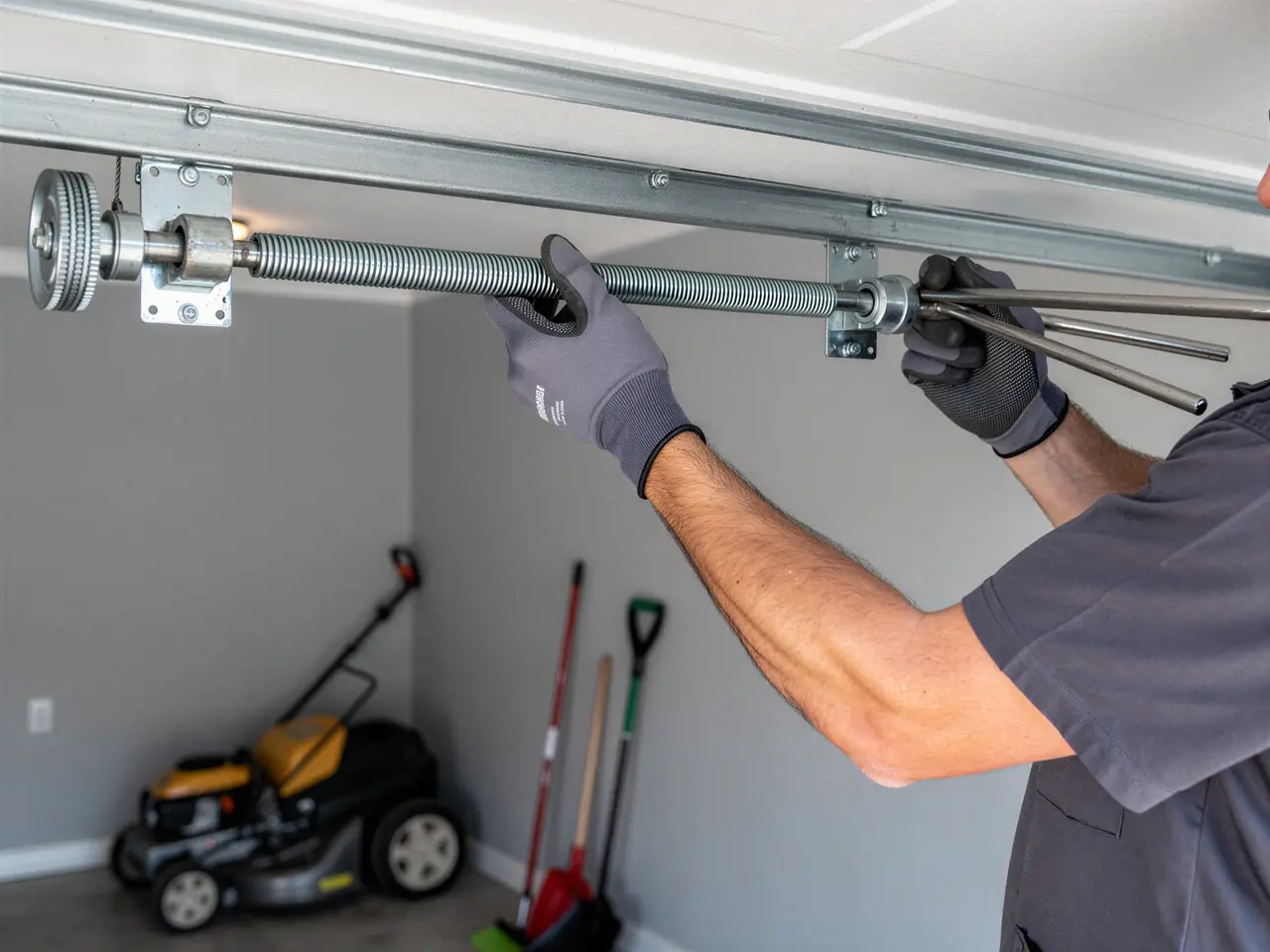
Most houses in the Buckeye service area went up after 2010, which means you're dealing with torsion springs built to a single modern cycle rating rather than the mismatched leftover hardware you'd find on an older street. That sounds simple, but it isn't always. Builders in this stretch of the valley installed double-door openers sized for wide, heavy doors, and the torsion springs paired with them carry more wound tension than the single-door setups common elsewhere. When one of those springs lets go, the door doesn't just stop working - it can drop fast, and the opener motor takes a load it was never built to lift alone.
The complication isn't the age of the house. It's that a severe-heat climate puts these newer springs through more daily temperature swings than their cycle rating assumed. A spring rated for 10,000 cycles doesn't care if it's in a 2012 build or a 1985 one - heat-driven metal fatigue adds up regardless. On a double door, we almost always find both springs close to failure together, even if only one has actually snapped, because they've carried the same load through the same heat for the same number of years.
The Cost of This Job
We're not going to put a number here that doesn't apply to your door - torsion spring cost depends on wire size, coil length, and how many springs your door actually needs, and that varies by door width and weight even within the same subdivision. What we can tell you is what drives the number up or down: whether it's a single door or a double, whether the opener and cables also need attention after the spring let go, and whether the spring on hand matches your door's original cycle rating or we have to order one.
That last point is the honest limitation. We carry the common sizes used in this area's post-2010 construction, but a less typical coil length or an older spring from a remodel can mean a short wait on parts. We'd rather tell you that up front than quote a same-day fix we can't actually deliver. If a cable, drum, or bottom bracket got damaged when the spring broke - which happens more than people expect - that gets added to the job, and we walk through it with you before any work starts, not after.
Why This Fails Locally
Garage door springs fail everywhere eventually. What's specific to Buckeye is how fast the heat gets there. A severe-heat climate band means the steel in your spring expands and contracts through a wider daily range than it would in a milder area, and that cycling fatigues the temper of the coil faster than mileage or door openings alone would predict. On a newer house - and most of the service area is newer construction - the spring is often still well within its rated cycle count by the door-opening number alone, but the heat has already done a lot of the damage that number doesn't account for.
Double garage doors, common across this mostly post-2010 housing stock, make it worse. Two springs under heavy daily heat load means two points of failure instead of one, and when one goes, the other is usually not far behind even if it hasn't snapped yet. That's why we check both springs on a double door every time, not just the one that broke.
What You Are Seeing
A broken torsion spring usually announces itself. The door feels suddenly heavy - you try the opener and it strains, or the door moves an inch and stops. Sometimes there's a loud bang from the garage, often in the early morning or evening when the day's heat swing is sharpest and the coil finally gives. Other times it's quieter: the door closes unevenly, one side dropping faster than the other, or a cable goes slack because the spring stopped carrying its share of the weight.
If you try to force the door open by hand or run the opener repeatedly once you notice this, you risk bending the track or burning out the motor. Don't. A garage door with a broken spring is not a door that's 'a little stiff' - it's a door running on one support instead of two, and the opener was never meant to lift that weight by itself for more than a few tries.
Frequently asked questions
How do I know if it's the spring and not the opener?
If the door won't budge, or barely lifts before the opener strains and stalls, that's almost always the spring, not the motor. The opener is built to assist a properly sprung door, not lift the full weight on its own. A heard bang from the garage followed by a door that suddenly feels much heavier is the clearest sign.
Can I replace just one spring on my double door?
You can, but on a double garage door we recommend replacing both at once. They've carried the same heat cycling for the same years, and the one that hasn't broken yet is usually close behind. Replacing one and leaving the other is a short-term fix that often means a second call soon after.
Is it ever not worth repairing?
A spring itself is almost always worth repairing rather than replacing the whole door. But if the spring failure damaged the track, drums, or bent panels on an older door, the full repair cost can approach what a new door costs - that's a conversation we have with you before starting any work, not a surprise on the invoice.
Related services
By Neighborhood
Spring Repair across the Buckeye area
We also handle spring repair in these Buckeye-area suburbs.
Book garage door service in Buckeye
Call now or request a quote - tell us what the door is doing and where you are.