
Buckeye, AZ · Garage Door Service
Garage Door Service for Litchfield Park's 2001-Era Homes
Litchfield Park homes mostly date to 2001, a decade older than newer stock nearby. We travel from Buckeye to fix the springs, rollers, and openers that era actually has.
- Repairs & new doors
- Springs & openers
- Serving Buckeye & the metro
Parts We Carry
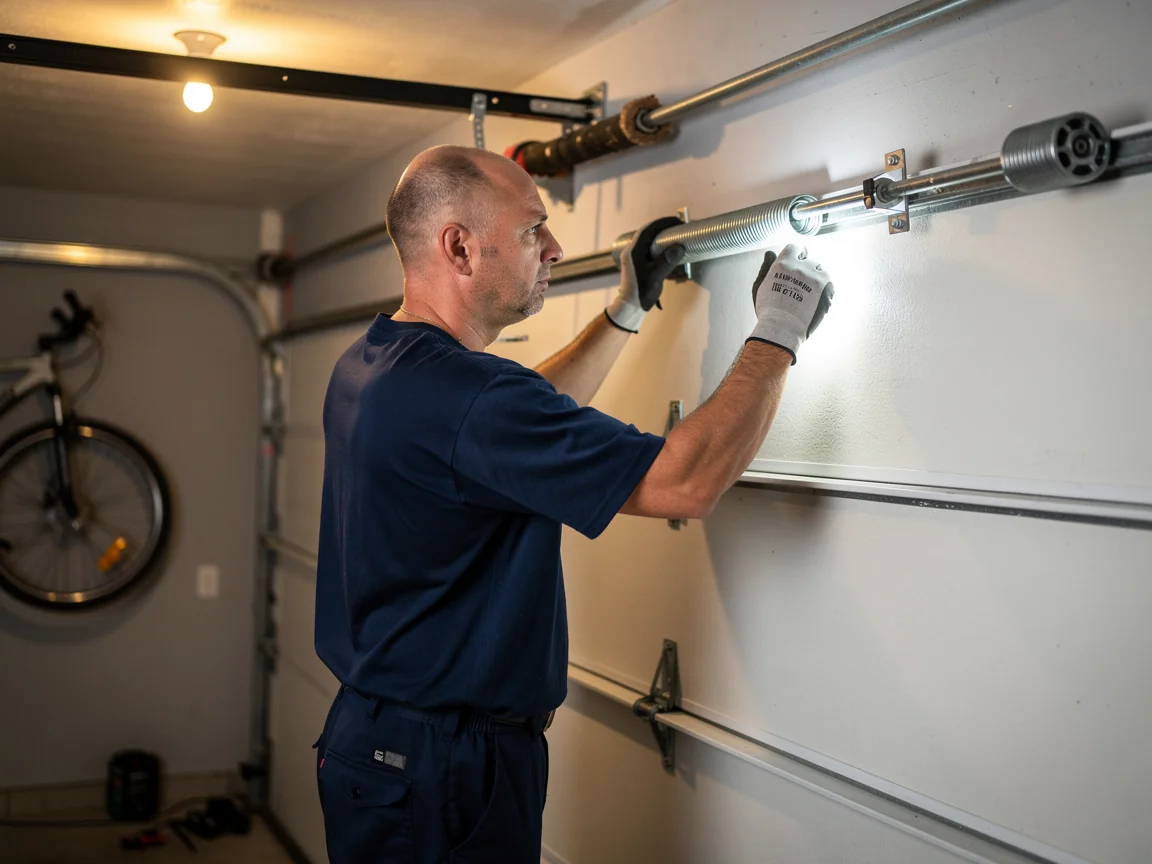
Litchfield Park's housing stock centers on a 2001 median build year, which puts it a good decade ahead of the older pockets in our coverage area but well behind the post-2010 construction that makes up most of the rest of it. That split matters for parts. A 2001 build usually came with a torsion spring system on a steel sectional door, standard 2-inch rollers, and an opener that's had at least one motor or logic board swap by now if it's still original. We carry torsion springs sized for that era's door weight, steel and nylon rollers, galvanized track sections, and belt or chain-drive openers that match the headroom and mounting these houses were built with. We don't stock parts for the heavier insulated doors that showed up in newer construction after 2010 as a default option - if your door is one of those upgrades rather than the original, tell us when you call so the truck rolls with the right spring and not a guess. Cables, drums, bottom brackets, and weatherstripping round out the regular load-out, since those wear out on a predictable clock no matter what year the door went in.
The Cost of This Job
We don't publish flat prices here because the job itself varies more than the address does. A broken torsion spring on a 2001-era single door is a different cost than a two-car door with worn-out rollers and a failing opener logic board, and the only way to price it straight is to look at the door. What we can tell you is that the homes in this part of our service area are consistent enough in age - that 2001 median build year - that most repair calls land in a narrow band of common failures: spring fatigue, roller wear, and opener boards reaching the end of their service life. That consistency keeps estimates predictable even without a published rate card. If your door has been modified from original - a different opener installed, a heavier replacement panel - say so up front, because that's the kind of detail that moves a job out of the typical range. We'll give you a number before we start work, not after.
Why This Fails Locally
Because most homes here went up around 2001, their torsion springs are now well past the point where fatigue failure becomes the expected outcome rather than the exception - springs don't fail on a calendar, but 20-plus years in a climate with severe summer heat accelerates the wear that eventually snaps one. Heat does two things to these doors: it dries out the lubricant on rollers and hinges faster than in milder climates, and it puts extra load on opener motors that are already working against a spring losing tension. In homes with the original 2001 opener, we're usually looking at a motor or circuit board that's outlived its expected run, not a simple sensor fix. None of this is unique to one house - it's a function of when this stretch of the area was built, which is a different fault pattern than you'd find in the newer construction closer to the rest of our coverage zone.
The Complications
With 2,867 households in this area, a large share of the calls we take here involve the same handful of original components aging out at roughly the same time, which is useful for diagnosis but means parts demand clusters - when one spring size is in high turnover, lead time on that exact part can stretch a little longer than on a less common size. The other complication is travel. We work out of Buckeye, and Litchfield Park sits about 17 miles out, which is within our normal range but means we schedule by route rather than promising a same-hour arrival. If a spring lets go on a Friday afternoon, we'll give you an honest window rather than a guess. Across the wider service area we cover 2,881 households and roughly 1,915 owner-occupied houses, and the income profile here - a median household income of $124,973 - tends to track with owners who replace an opener rather than patch it repeatedly, which changes the repair-versus-replace math on an aging unit.
The DIY Question
Replacing a roller or tightening track bolts on a 2001-era door is reasonable DIY territory if you're comfortable with a ladder and a socket wrench. A torsion spring is not. These springs store enough force to break bones or worse, and the winding bars and clamps needed to do it safely aren't something most homeowners have sitting in a drawer. We'll say plainly: if the door won't open, or opens unevenly, or you hear a loud bang followed by the door going slack, that's a spring job, and it's not the place to save a service call. Where DIY makes sense is smaller stuff - lubricating hinges, checking weatherstripping, testing the auto-reverse safety feature. Beyond that, especially on an opener board that's original to a 2001 install, the risk of making a bad connection worse outweighs what you'd save doing it yourself.
How Long It Takes
Job length here depends more on what's failed than on the house itself. A single spring swap on a standard door is usually the fastest call we make; a full opener replacement, especially on a 2001-original unit where the mounting and wiring don't match current hardware, takes longer because we're adapting parts rather than dropping in a direct swap. Heat plays a role too - working in direct sun on a steel door in the afternoon slows things down compared to a morning call, so if you have flexibility on timing, an earlier slot often means a faster job. We don't promise a fixed number of hours up front because doing so on a door we haven't seen yet is a guess dressed up as a fact. What we will do is tell you honestly, once we've looked at it, what the job involves and roughly how long it'll keep us there.
Frequently asked questions
Why does my garage door seem older than my neighbor's in a newer part of the service area?
Litchfield Park's homes center on a 2001 median build year, while a lot of the rest of our coverage area is newer construction from after 2010. Same company, same service, but a different hardware generation - which is why the common failures here (spring fatigue, aging opener boards) look different from what we see on newer doors elsewhere.
Do you have a branch in Litchfield Park?
No. We're based in Buckeye and travel out to Litchfield Park, about 17 miles away, for service calls. We schedule by route rather than promising a same-hour window, but we'll give you an honest estimate on timing when you call.
Is it worth replacing an opener instead of repairing it on a 2001-era door?
Often yes, once the board or motor is original to the house. We don't have a fixed rule, but a 20-plus-year-old opener working against a tired spring in severe summer heat tends to fail again soon after a patch repair. We'll walk you through the repair-versus-replace math on your specific unit before recommending either.
More garage door services in Litchfield Park
- Emergency Garage Door Repair in Litchfield Park
- Garage Door Repair in Litchfield Park
- Garage Door Maintenance in Litchfield Park
- New Garage Door Installation in Litchfield Park
- Garage Door Opener Installation in Litchfield Park
- Garage Door Opener Repair in Litchfield Park
- Garage Door Spring Repair in Litchfield Park
Book garage door service in Buckeye
Call now or request a quote - tell us what the door is doing and where you are.